
July 8, 2026 · Megan Carter
HCPCS Level II explained: the third code book everyone forgets
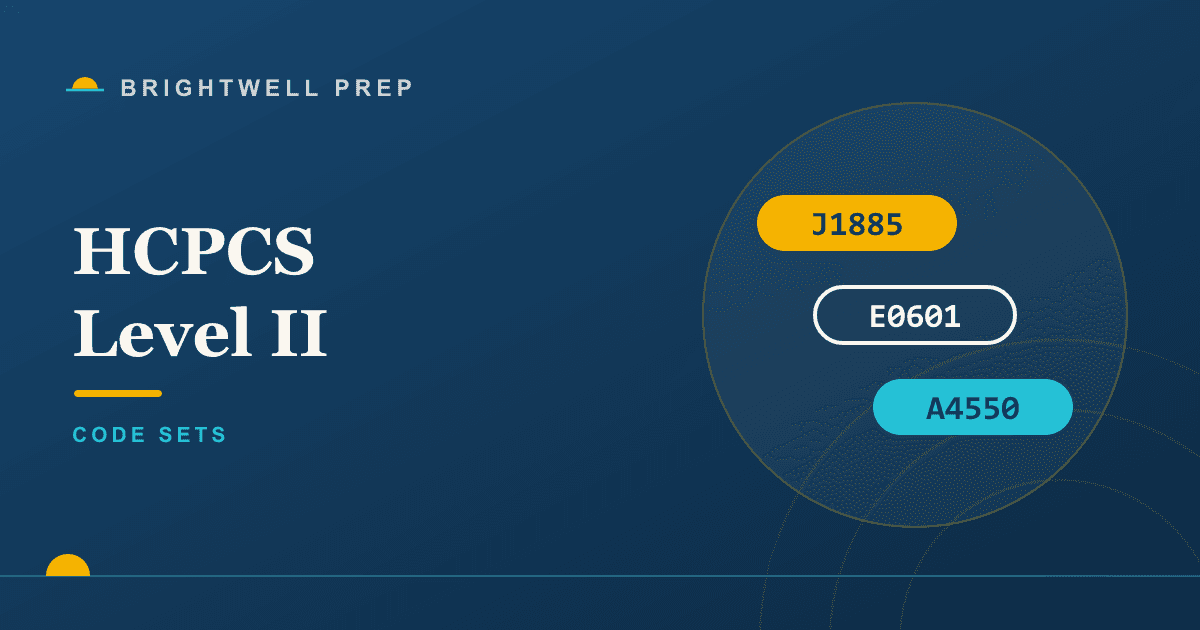
Ask a new student to name the coding books and you'll get CPT and ICD-10-CM instantly. The third one comes with a pause. HCPCS Level II is the smallest of the three manuals, the least glamorous, and reliably the one that costs points on the CPC exam precisely because people treat it as an afterthought.
Here's what it actually does and when you reach for it.
The gap it fills
CPT describes procedures and services a clinician performs. But a huge amount of billable healthcare isn't a procedure. The drug injected into the patient's arm. The wheelchair they went home with. The CPAP machine, the ambulance ride, the surgical dressings. CPT has no codes for most of that, so Medicare built a second system to cover it, maintained by CMS rather than the AMA.
Technically, CPT itself is HCPCS Level I, which is why the third book is called Level II. In everyday use, though, when a coder says "HCPCS," they mean Level II. Spotting the codes is easy: one letter followed by four digits.
The letters tell you the territory
That first letter sorts the codes into families, and a handful of them do most of the work.
J codes are drugs administered by injection or infusion. J1885 is ketorolac, an injectable painkiller you'll meet constantly in outpatient charts. When a provider both performs an injection and supplies the drug, the administration comes from CPT and the drug itself from a J code, which is exactly the kind of two-book thinking exams love to test.
E codes are durable medical equipment: E0601 is a CPAP device. A codes cover supplies and ambulance transport. G codes are procedures and services Medicare defines when CPT doesn't have what it needs. L codes handle orthotics and prosthetics. There are more families, but recognize these five on sight and you've covered most of what outpatient coding and the CPC will throw at you.
When you reach for which book
In practice, the decision rule is simpler than students expect. Was it a service or procedure performed on the patient? Start in CPT. Is it the reason for the encounter, a diagnosis? That's ICD-10-CM. Is it a thing, a drug, equipment, a supply, a ride? HCPCS Level II.
The wrinkle is payer preference. Some payers want a CPT code where Medicare wants a G code for the same service. Working coders learn their payers' quirks; exam takers just need the default logic plus the awareness that Medicare-specific codes exist.
Why it matters on the CPC
AAPC lists HCPCS Level II as its own content area on the exam, and you're allowed to bring the manual in with you, whichever publisher's edition you like, as long as it's the current code set year. Questions there tend to be fast and factual, which makes them either free points or quick losses. Nobody fails the CPC because of HCPCS alone, but plenty of people give away three or four questions there that they needed elsewhere.
The fix is cheap: include HCPCS lookups in your practice-exam reps instead of drilling only the big two books. Tab the J-code table of drugs, know your way to the E and A sections, and the questions become twenty-second wins. Our CPC simulator mixes HCPCS questions in at exam frequency for exactly that reason, so the third book stops being the forgotten one right around your second mock.
Written by
Megan CarterMegan Carter writes the Brightwell Prep study guides for allied health certification exams. She writes the way she'd prepare someone for exam day: plain English, real exam-format practice, and a rationale for every single answer. Her guides come with the Brightwell Prep online exam simulator, so readers train under the same time pressure they'll face at the testing center.