
July 5, 2026 · Megan Carter
Medical billing vs medical coding: what's actually the difference?
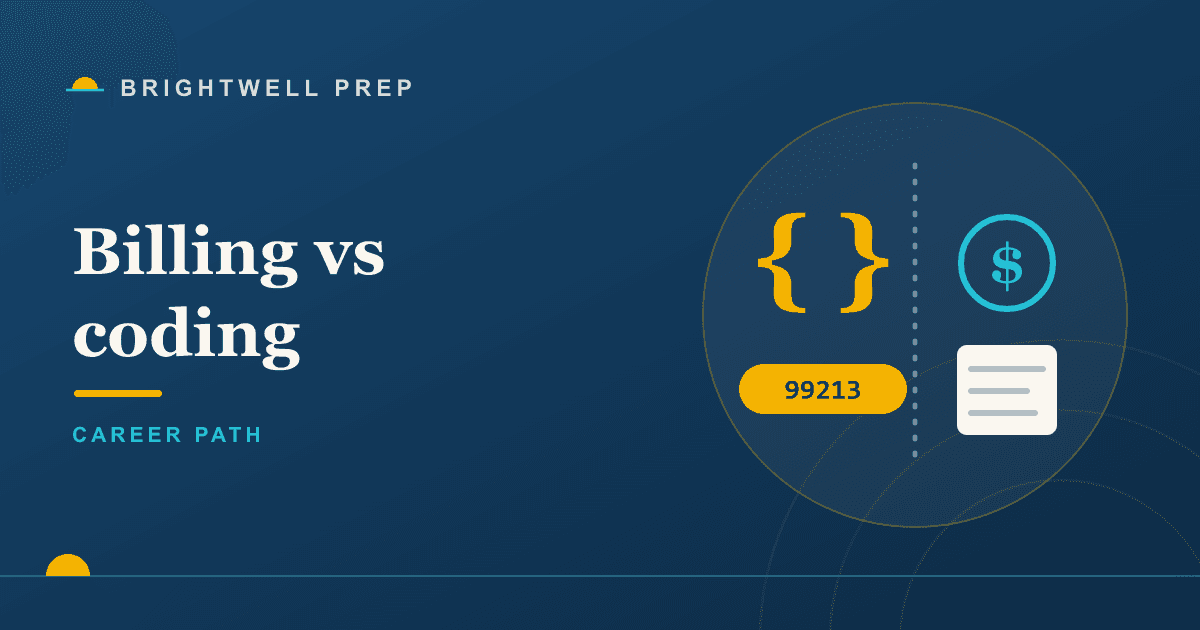
Every training program sells "medical billing and coding" as if it were one job. Then you get hired and discover it's two desks. Sometimes they sit next to each other, sometimes they're in different buildings, and in a small practice they might both belong to the same overworked person. But the work is different, and knowing the difference before you pick a training path will save you money and months.
What a medical coder does all day
A coder reads what the provider documented (an office visit note, say, or an operative report) and translates it into codes: CPT for what was done, ICD-10-CM for why. The note says "removed a 2.3 cm lesion from the left forearm," and the coder turns that into a code with the correct size and site attached.
It's detective work with reference books. You're checking guidelines, comparing near-identical code descriptions, and occasionally messaging a provider because the documentation doesn't say what everyone assumes it says. If you like puzzles and you can sit with a dense paragraph until it gives up its answer, coding will suit you.
What a medical biller does all day
The biller takes those codes and gets them paid. That means building the claim, scrubbing it for errors, submitting it to the payer, and then dealing with whatever comes back, which on a bad day is a denial and on a worse day is a request for records. A biller works the phone and the payer portals. They know that one insurer wants a certain modifier where another doesn't, and that a claim older than the timely filing limit is money the practice will simply never see.
Billing is problem solving with people attached. Less reading of clinical notes, more untangling of payer rules and following the money until the balance hits zero. I wrote about why claims get denied separately, because that's most of a biller's week right there.
Where the confusion comes from
The two jobs share a pipeline. Bad codes create denials. That's why billers need to understand coding, and why coders need to understand what happens downstream when they guess. Training programs bundle them because both jobs start from the same base: medical terminology plus anatomy, followed by the code sets.
In small practices, one person really does both. In hospitals and large groups, they're separate departments with separate career ladders.
Which one should you pick?
Ask yourself where you want your attention to live. On documents, or on conversations?
If your answer is documents, start on the coding side. The standard credential is the AAPC's CPC, and I've written an honest piece on how hard the CPC exam is. If your answer is conversations and follow-through, the billing side fits better, and the matching credential is the CPB. The full comparison is in CPC vs CPB: which certification first.
On pay: AAPC runs a salary survey every year, and the consistent pattern is that certified people out-earn non-certified people doing the same work. The gap between billers and coders matters less than the gap between credentialed and not.
One last thing worth saying plainly. You don't have to choose forever. Plenty of coders started in billing and moved over once they knew the payer side. The skills stack instead of competing. Pick the door that looks more like you and walk through it. The other one isn't going anywhere.
Written by
Megan CarterMegan Carter writes the Brightwell Prep study guides for allied health certification exams. She writes the way she'd prepare someone for exam day: plain English, real exam-format practice, and a rationale for every single answer. Her guides come with the Brightwell Prep online exam simulator, so readers train under the same time pressure they'll face at the testing center.